
Stand at a Bangkok street cart early in the morning and watch the vendor work: Oliang powder packed into a cloth sock, near-boiling water poured through in a slow arc, the brew steeping until it’s almost black. A generous spoon of condensed milk is stirred in while the coffee is still hot. Then ice, and a drizzle of evaporated milk that floats in a pale ribbon on top. The whole process takes less than ten minutes and costs around ฿30. What you get is a glass of Thai iced coffee (Oliang, โอเลี้ยง) that most café menus abroad have never quite managed to replicate.
This recipe covers both routes: the traditional tungdtom cloth-filter method and a French press adaptation for home kitchens. Both produce a genuine result. The ingredient ratios below are calibrated for a two-glass batch, and there’s a troubleshooting table for common mistakes. If you want to try the drink before making it yourself, our specialty coffee roasters in Bangkok directory lists the cafés in Bangkok that take Thai coffee traditions seriously.
What Makes Thai Iced Coffee Authentic
Most iced coffees are espresso or cold brew with milk and ice. Thai iced coffee is built differently from the ground up. The
- Coffee blend: Oliang powder is not pure coffee. It combines Robusta beans with roasted corn, soybeans, and sesame seeds, typically 50% coffee, 25% corn, 20% soybean, 5% sesame seeds in the Pantainorasingh blend. This is what creates the smoky, earthy, slightly nutty depth that dark-roast espresso alone can’t replicate.
- Brewing tool: The tungdtom (ถุงต้ม) is a cotton cloth bag attached to a metal-ring handle, like a deep sock. Steep time is long (5–10 minutes), and the result is a very strong concentrate.
- Sweetener: Sweetened condensed milk, not sugar syrup, not fresh milk, is what gives oliang its signature caramelised sweetness and body. Without it, you have iced black coffee. With it, you have Thai iced coffee.
For the full background on what Oliang is and where it comes from, see our Thai Iced Coffee Guide.
Ingredients of Thai Coffee(Makes 2 Glasses)
The quantities below are a calibrated starting point. Adjust the condensed milk to taste. Street vendors tend to be generous with it, so feel free to use less if you prefer a lighter drink.
| Ingredient | Quantity | Notes |
| Oliang powder (e.g., Pantainorasingh) | 6–8 tbsp | Or 4 tbsp per 250ml water |
| Water | 500ml | Just below boiling (90–93°C) — do not use a rolling boil |
| Sweetened condensed milk | 3–4 tbsp per glass | Add while brew is still hot, so it dissolves fully |
| Evaporated milk | 1–2 tbsp per glass | Poured slowly over the top to create the float |
| Sugar | 1 tsp per glass (optional) | Only if you want extra sweetness beyond the condensed milk |
| Salt | Tiny pinch (optional) | Rounds out the sweetness and brings up the coffee notes |
| Ice | Fill each glass fully | Crushed ice preferred — cools faster, dilutes slower |
☕ Bangkok sourcing tip
Pantainorasingh and similar oliang powder blends are stocked at Big C, Tops Market, Villa Market, and Makro, look near the instant coffee and Thai teas, usually labelled in English as “Oliang Powder Mix.” Budget ฿30–฿60 per packet. Sweetened condensed milk brands to look for: Longevity (richest texture) or Carnation (widely available).
Equipment for Thai Coffee
| Method | Equipment needed | Result quality | Best for |
| Traditional (tungdtom) | Cloth sock filter + metal ring + heatproof jug | Authentic — smoothest extraction | Purists; easy to find in Bangkok markets and online |
| French press | French press (any size) | Excellent — produces similar depth | Home brewers; most accessible |
| Aeropress | Aeropress + fine filter | Strong, clean, low bitterness | Those who want precise control |
| Cold brew (overnight) | Jar or pitcher + fine strainer | Smooth, very low bitterness | Batch prep: 12–16 hr cold steep |
If you don’t own any of these, a heatproof glass jug and a fine-mesh strainer or a cotton cloth (muslin) will work. What matters most is a long steep, not the exact tool you use.
Method 1: The Authentic Tungdtom Method
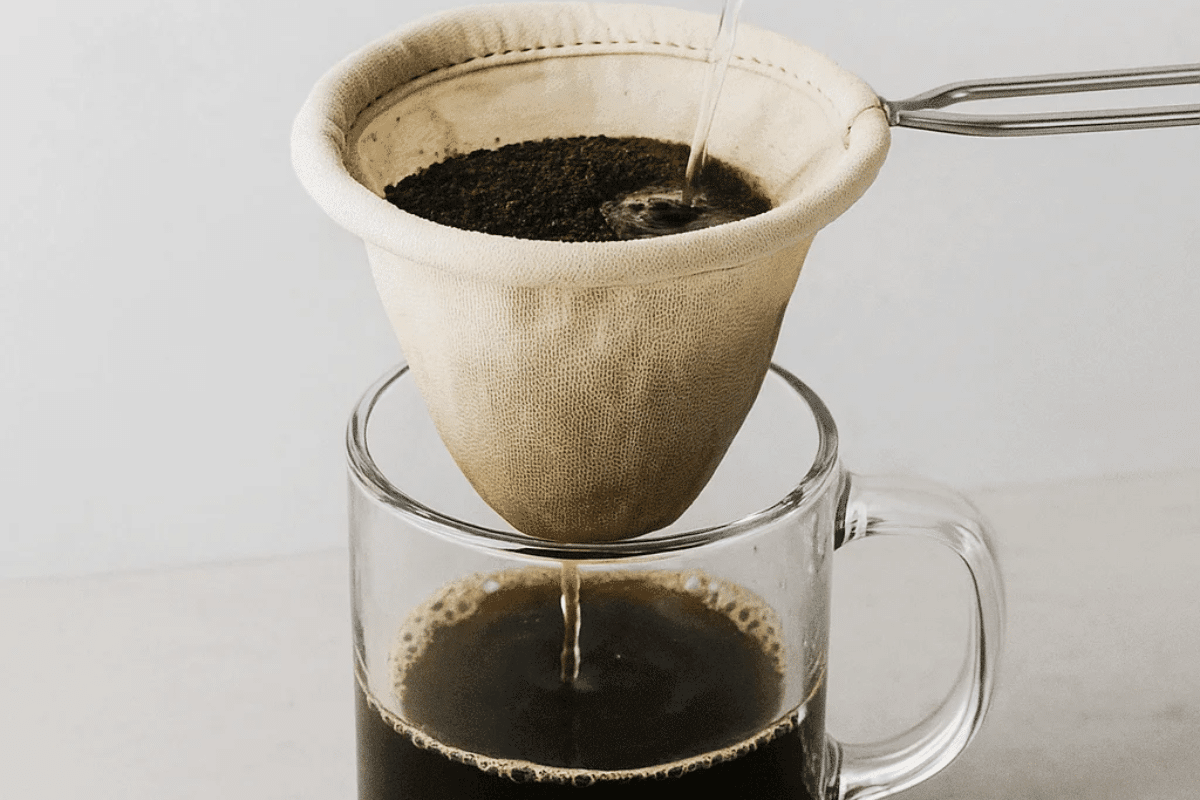
This is how Bangkok street vendors make it. The steep produces a smooth, almost syrupy concentrate with none of the bitterness you’d get from a quick drip.
- Load the filter. Pack 6–8 tablespoons of Oliang powder into the tungdtom sock. Shake gently to settle the grounds.
- Pour the water. Hold the sock over a heatproof jug or carafe. Pour 500ml of just-below-boiling water (90–93°C) through the sock slowly. Do not use a rolling boil; it scorches the grain blend and pushes bitterness.
- Steep. Let the sock sit in the jug, submerged in the brew, for 5–10 minutes. The longer the steep, the stronger the result. Street vendors typically aim for 7–8 minutes. Don’t squeeze the sock; squeezing forces bitter compounds into the brew.
- Sweeten immediately. While the brew is still hot, add 3–4 tablespoons of sweetened condensed milk per glass and stir well. The heat is essential here: condensed milk is thick and won’t dissolve properly in cold coffee.
- Add optional extras. Stir in sugar (if using) and a tiny pinch of salt. Taste the concentrate — it should be very strong and noticeably sweet, because the ice and evaporated milk will dilute and balance it.
- Cool the concentrate. Let it reach room temperature (or refrigerate for at least 30 minutes). Pouring hot concentrate directly over ice melts the ice quickly and waters down the drink.
- Pour over ice. Fill two tall glasses fully with crushed ice. Pour the sweetened concentrate over each glass to about three-quarters full.
- Float the evaporated milk. Pour 1–2 tablespoons of evaporated milk very slowly over the back of a spoon onto the surface of each glass. This creates the layered look. Do not stir, serve immediately, and let the drinker stir it in.
Method 2: French Press at Home
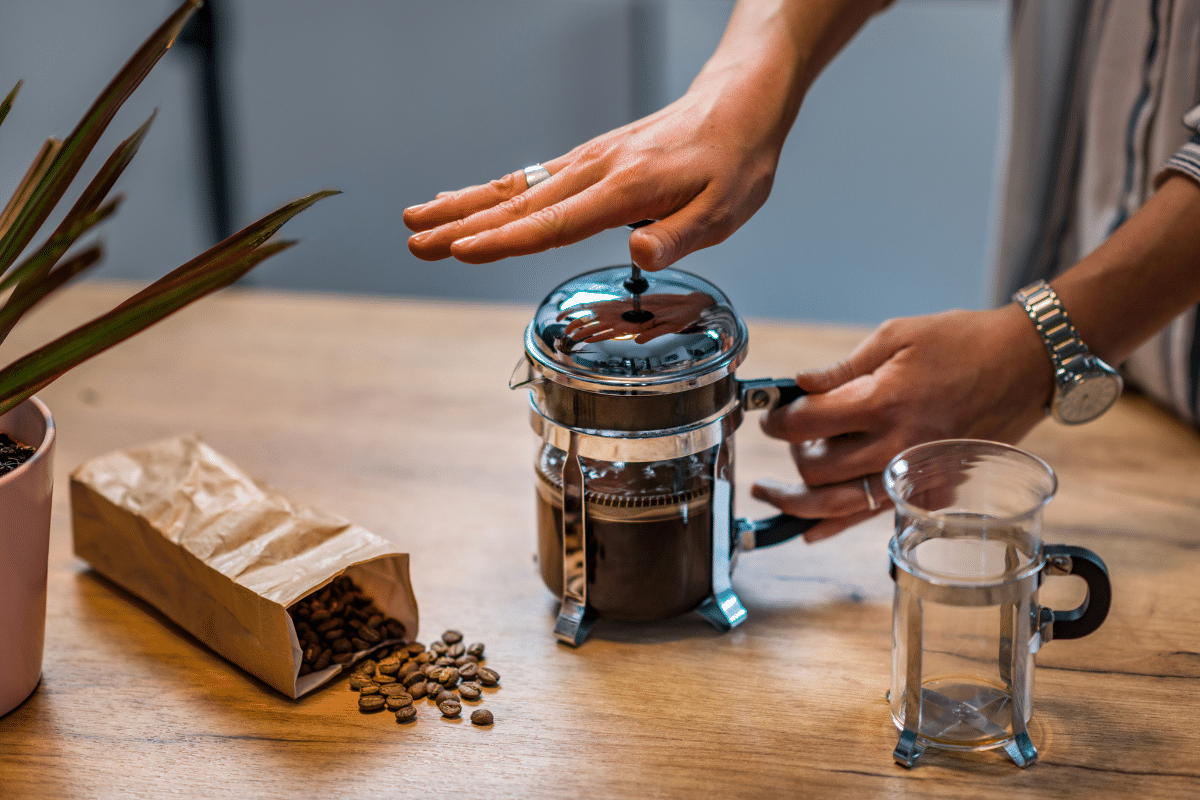
Produces an excellent result with equipment most home kitchens already have. The steep time and ratio are slightly adjusted to compensate for the different extraction dynamics.
- Measure and load. Add 6 tablespoons of Oliang powder (or dark Robusta + spices; see substitution section below) to your French press.
- Add water. Pour 500ml of water at 90–93°C over the grounds. Stir once to wet everything evenly.
- Steep. Place the lid on (plunger up) and steep for 5–6 minutes. For French press, 5 minutes is often enough; longer risks bitterness from the fine particles.
- Press slowly. Push the plunger down steadily. Avoid forcing it; a slow press keeps the coffee clean.
- Sweeten and finish. Follow steps 4–8 from the tungdtom method above: sweeten while hot, cool, pour over ice, float evaporated milk.
💡 Make-ahead concentrate
The sweetened concentrate (before ice) keeps in the fridge for up to 5 days. Make a double batch on Sunday, and you have Oliang ready in under 2 minutes every morning. If the concentrate thickens, just stir; the condensed milk can settle to the bottom.
Coffee Ratios and Troubleshooting
Getting the ratios right on the first try is the biggest challenge. Here is what causes the most common problems and how to fix each one:
| Problem | Likely cause | Fix |
| Too bitter | Over-steeped or water too hot | Reduce steep to 5 min; bring water off the boil for 30 sec before pouring |
| Too watery / thin | Brew too weak or too much ice melt | Use more Oliang (up to 8 tbsp per 500ml); cool concentrate fully before pouring over ice |
| Too sweet | Too much condensed milk | Reduce to 2 tbsp per glass; evaporated milk adds creaminess without the extra sweetness |
| Not sweet enough | Too little condensed milk or added while cold | Always add condensed milk while hot; increase to 4 tbsp per glass |
| Flat, no depth | Coffee not strong enough or wrong blend | Use proper Oliang powder or dark Robusta; steep for the full 7–10 minutes |
| Evaporated milk sinks | Poured too fast or from too high | Pour over the back of a spoon held just above the surface; pour very slowly |
| Grainy texture | Fine grounds passing through (French press) | Let the pressed coffee sit 1 min before pouring; switch to a cloth filter |
The single most important ratio to get right: 1 tbsp Oliang powder per 60–70ml of water, steeped for 7 minutes, with 3 tbsp of condensed milk per glass of finished coffee. Everything else is adjustable to taste.
No Oliang Powder? The Substitution Route
Oliang powder is not sold at every supermarket outside Thailand. This combination produces a result close enough to satisfy most cravings:
| Substitute ingredient | Quantity per 500ml of water | Role |
| Dark-roast Robusta coffee (ground fine) | 6 tbsp | Core base: do not use medium-roast Arabica, it’s too light |
| Ground cardamom | ½ tsp | The most important spice contributes to the warm, smoky character |
| Almond extract | 3–4 drops | Adds the nutty depth that the grain blend provides |
| Ground coriander | Small pinch (optional) | Subtle earthy note; skip if you can’t source it |
Brew the substitute blend exactly as you would Oliang powder. The result will be bolder and slightly less smoky than authentic oliang, but will convincingly replicate the warm-spiced, sweet character. Once you find a source for Oliang powder, you will taste the difference; the grain blend adds a depth that spices alone can’t fully imitate.
Thai Coffee Variations Worth Trying
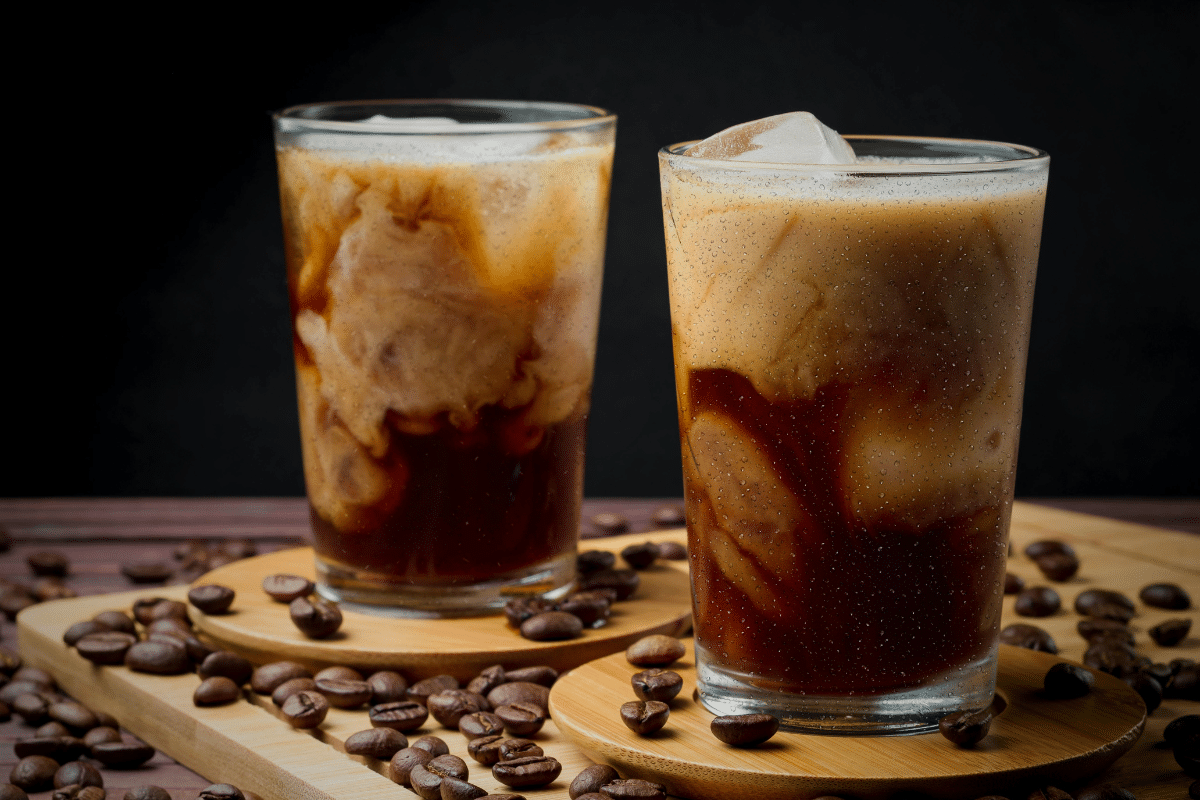
Black Thai Iced Coffee (Oliang Dum)
Skip the condensed and evaporated milk entirely. Just the sweetened concentrate over ice, with a teaspoon of sugar stirred in while hot. Much lighter in calories and caffeine-forward. This is how many Thais who don’t drink milk take their morning oliang.
Vegan Version
Replace sweetened condensed milk with full-fat coconut condensed milk (available in most supermarkets and online). For the float, use full-fat canned coconut milk instead of evaporated milk. The result is slightly sweeter and has a faint coconut note that actually works very well with the grain-coffee blend.
Coffee Ice Cubes
Freeze leftover concentrate in ice cube trays. Use these instead of plain ice in your glass. The drink stays cold for longer without getting diluted as the cubes melt. Particularly useful if you’re making Oliang to sit on a desk during a work session.
Cold-Brew Oliang
Add 8 tablespoons of Oliang powder to 600ml of cold water in a jar. Seal and refrigerate for 12–16 hours. Strain through a cloth filter or fine mesh. The result is less bitter than the hot method and has a smoother, rounder character, excellent if you find hot-steeped oliang too sharp. Sweeten with condensed milk after straining.
Frequently Asked Questions About Thai Iced Coffee Recipe
Can I use espresso instead of Oliang powder?
You can, and the condensed milk will still give it a Thai character. But espresso uses pure Arabica beans and lacks the grain-blend smokiness of Oliang. It will taste like a very good sweetened iced espresso rather than an authentic Oliang. If Oliang powder is unavailable, the substitution blend above (dark Robusta + cardamom) gets much closer than espresso.
How strong should the brew be?
Much stronger than standard drip coffee, the undiluted concentrate should taste intensely bitter and almost syrupy before the condensed milk goes in. That strength is what survives the ice melt and the milk. If the finished drink tastes thin, the brew wasn’t strong enough.
Where can I try authentic Oliang in Bangkok?
Street carts in Chinatown (Yaowarat Road) and around Hua Lampong station serve some of the most traditional oliang in the city, for ฿25–฿35 a glass. For specialty interpretations using Thai-sourced Robusta, browse our Bangkok coffee shops directory and filter for coffee-focused venues. More on where to explore Bangkok’s café scene in our café directory in Thailand.
How long does homemade Oliang concentrate keep?
The sweetened concentrate (without ice or evaporated milk added) keeps in a sealed container in the fridge for up to 5 days. The flavour is actually slightly better on day 2 as the grain notes mellow. Shake or stir before serving, as the condensed milk settles.
What else should I know about Thai coffee?
For a complete answer to how Thai coffee compares to other Southeast Asian styles, ingredient sourcing, and the history of Thailand’s coffee culture, our guide to making the perfect Thai coffee at home goes deep on all of these. For broader questions about Thai coffee, origin, strength, caffeine, and varieties, the Thai coffee FAQs cover everything in one place.
Comments