
If you’ve ever ordered a drink from a Bangkok street cart and received something dark, sweet, and almost impossibly refreshing, you’ve probably tried Thai iced coffee, though locals know it by a different name entirely. “Oliang” (โอเลี้ยง) is the drink that built Thailand’s coffee culture long before specialty cafés started lining the streets of Thonglor and Ari. Priced at ฿25–฿40 a glass from a street cart, it’s been poured into plastic bags and tall glasses across this country for generations.
But Thai iced coffee is not just coffee over ice. It’s a blend of Robusta coffee and roasted grains, corn, soybeans, and sesame seeds that creates a flavour profile unlike anything produced by a standard espresso machine. This guide covers what goes into oliang, how it’s traditionally made, how it compares to Vietnamese iced coffee, where to try it in Bangkok, and how to brew it yourself. If you’re exploring cafés in Thailand, understanding this drink is a good place to start.
What Is Thai Iced Coffee?
Oliang is Thailand’s traditional iced coffee. The name comes from the Teochew Chinese dialect spoken by the Chinese immigrants who shaped so much of Thai food and drink culture from the early 20th century onward: “O” (烏) means black, and “Liang” (涼) means cold. Literally: black and cold coffee.
What makes Oliang different from standard iced coffee is not the brewing method alone; it’s the coffee blend itself. Traditional Oliang powder is not pure coffee. It combines Robusta coffee beans with roasted grains and seeds: corn, soybeans, sesame seeds, and sometimes rice or cardamom. One of the most widely used commercial blends (Pantainorasingh) runs roughly 50% coffee, 25% corn, 20% soybean, and 5% sesame seed.
The result is a drink with bold coffee aroma layered with smoky, toasty, slightly nutty notes from the high-roasted grains. It’s more complex than a straight iced Americano and considerably more affordable.
The roots of Oliang’s unusual composition trace back to World War II. Coffee shortages forced vendors to blend their beans with other roasted grains to maintain supply. When the war ended, many Thais had grown fond of the blended taste, and the lower cost kept it a staple of everyday street drinking. Today it’s found at traditional coffee shops called raan kafae boran, market stalls, and increasingly on the menus of specialty roasters.
What Goes Into Oliang Powder?
Oliang powder is what separates Thai iced coffee from every other iced coffee in Southeast Asia. The mix is not standardised — coffee content varies between 20% and 80% across different brands and vendors. Here’s how a typical commercial blend breaks down:
| Ingredient | Typical share | Flavour role | Find it |
| Robusta coffee | ~50% | Core bitterness and caffeine | Pre-blended in Oliang powder |
| Corn | ~25% | Smoky sweetness, body | Pre-blended in Oliang powder |
| Soybean | ~20% | Earthy, roasted depth | Pre-blended in Oliang powder |
| Sesame seed | ~5% | Nutty aroma and complexity | Pre-blended in Oliang powder |
| Cardamom | Varies | Warm spiced note | Optional: some blends include it |
In Bangkok, oliang powder is stocked in any major supermarket: Big C, Tops, Villa Market, and Makro all carry it. Look for Pantainorasingh brand near the Thai teas and instant coffee mixes, often labelled in English as “Oliang Powder Mix” or “Thai Style Coffee.” Budget ฿30–฿60 per packet.
Want to make your own? Toast 20g of dried soybeans and 20g of dried corn kernels on low heat until lightly browned, then add 5g of sesame seeds off the heat. Grind everything together with 50g of Robusta coffee beans. Add one tablespoon of brown sugar and half a teaspoon of ground cardamom. It’s a starting point; most Bangkok coffee cart owners have their own closely guarded ratios.
How Thai Iced Coffee Is Made
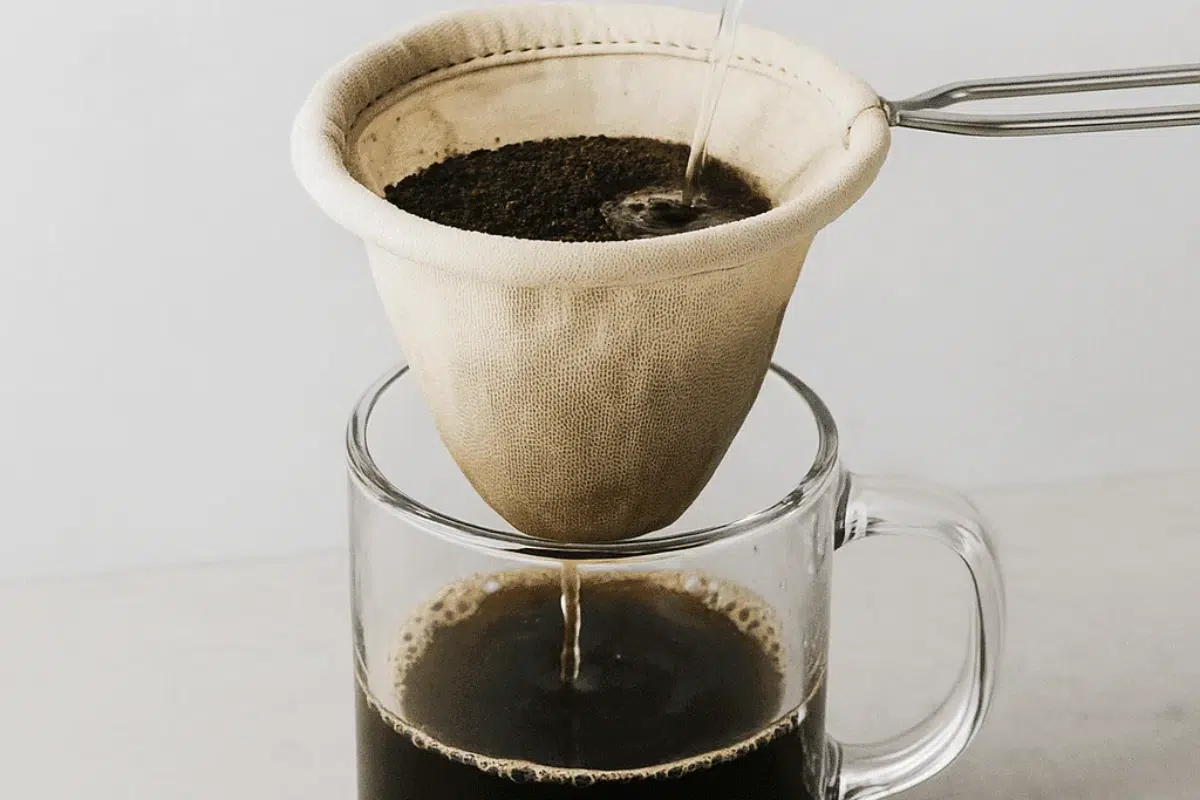
The traditional brewing tool is the tungdtom (ถุงต้ม), a cotton cloth bag attached to a metal ring with a handle, shaped like a deep sock. You’ll spot them at every old-school coffee stall in Bangkok. Here’s the standard method:
- Brew the concentrate. Load the cloth filter with Oliang powder (roughly 4 tablespoons per cup of water). Pour just-below-boiling water through into a heatproof jug. Steep for 5–10 minutes. The result should be very dark, far stronger than regular drip coffee.
- Sweeten while hot. Add 1–2 tablespoons of sweetened condensed milk and stir to dissolve. Street vendors add generously; adjust to taste. Sugar can go in too for extra sweetness.
- Pour over ice. Fill a tall glass with ice (crushed or cubed) and pour the cooled concentrate over.
- Top with evaporated milk. A slow drizzle of evaporated milk on top creates a layered appearance and adds a slightly richer, less intensely sweet creaminess. This float is the signature visual of Thai iced coffee.
The tungdtom can be swapped at home for a French press, Aeropress, or any fine cloth or paper filter. The essential thing is a long steep that extracts a genuinely strong concentrate. Weak Oliang brewed quickly tastes like watered-down sweet coffee.
The Different Ways to Order It
At Thai coffee stalls, oliang comes in a few distinct forms. Knowing the names saves confusion:
| Name | What you get |
| Oliang / โอเลี้ยง | Black iced coffee, no milk, the bold base version |
| Oliang nom / โอเลี้ยงนม | With sweetened condensed milk and evaporated milk on top |
| Yok law / ยกล้อ | Oliang with evaporated milk (or half-and-half) only lighter and less sweet |
| Oliang ron / โอเลี้ยงร้อน | Hot version of Oliang, served without ice |
Street price at a raan kafae boran or market cart: ฿25–฿40 per glass. At a specialty café serving an elevated version, expect to pay ฿80–฿150.
Thai Iced Coffee vs. Vietnamese Iced Coffee
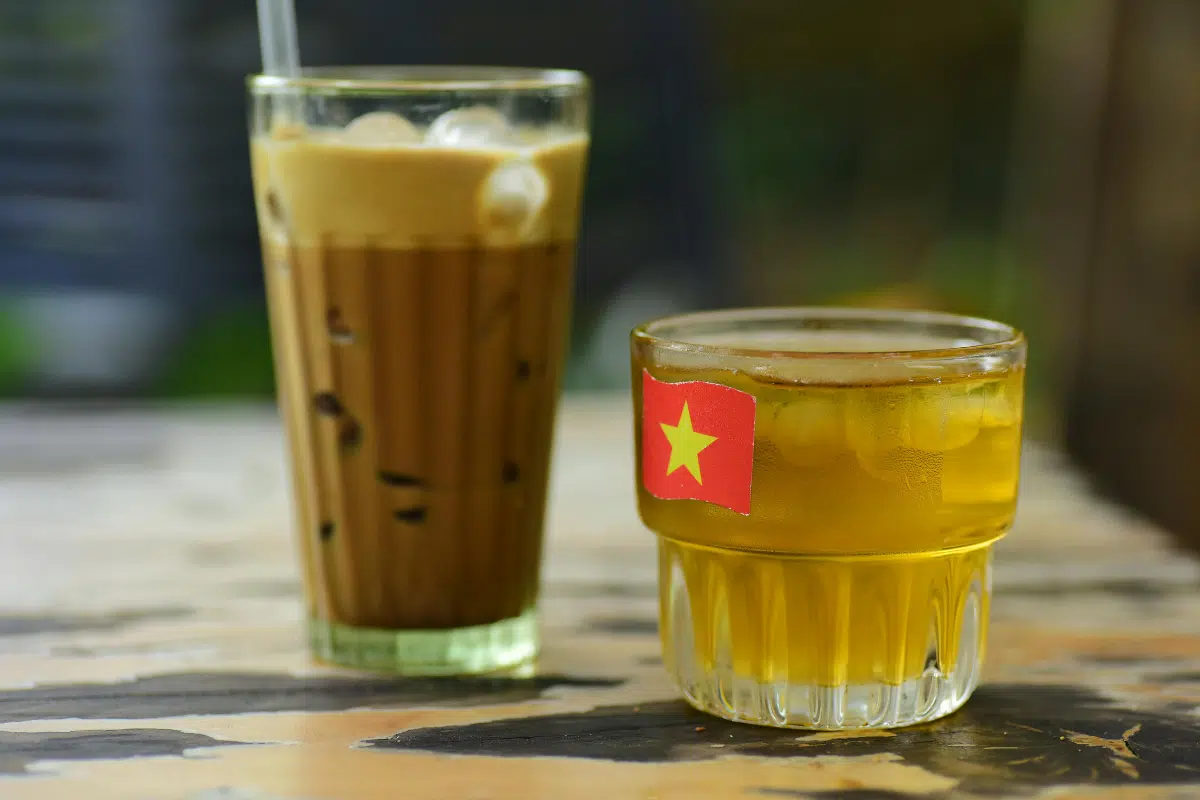
Both are strong iced coffees sweetened with condensed milk, and both are beloved in Southeast Asia. But they’re distinct drinks with different brewing tools, different coffee blends, and different flavour profiles.
| Feature | Thai Iced Coffee (Oliang) | Vietnamese Iced Coffee (Ca Phe Sua Da) |
| Coffee blend | Robusta + roasted grains (Oliang powder) | Pure Robusta (sometimes with chicory) |
| Brew tool | Tungdtom — cotton cloth filter | Phin — small metal drip filter |
| Brewing time | 5–10 minutes steep | 3–5 minutes slow drip |
| Flavour | Bold, smoky, toasty, slightly nutty | Bold, clean, strong, slightly bitter |
| Sweetener | Condensed milk + sugar, generous | Condensed milk, sometimes sugar |
| Texture | Creamy, visually layered | Rich, clean, and direct |
The tungdtom steep extracts those roasted grain notes that define Oliang’s character. The phin drip used for Vietnamese coffee produces something closer to a concentrated drip or espresso. Bold, yes, but without the smoky, toasty complexity that comes from brewing corn and soybeans alongside the beans. For a deeper look at how they compare in strength, see our guide on whether Thai coffee is stronger than Vietnamese coffee.
Where to Taste Oliang in Bangkok
Street carts in Bangkok serve Oliang every day, but the highest concentration of traditional coffee shops is clustered around Chinatown (Yaowarat Road), Bang Rak, and Talad Noi — neighbourhoods where the Teochew community first established the raan kafae boran tradition in the early 1900s. Expect a glass for ฿25–฿35 and service faster than any order you’ll place in a specialty café.
Bangkok’s specialty coffee scene has also embraced Oliang. Several roasters in the Thonglor/Ekkamai corridor and Ari now serve elevated versions alongside their single-origin pour-overs, sometimes using Thai-grown Robusta from the south of the country rather than commercial oliang powder. Browse our specialty coffee roasters in Bangkok to find the cafés experimenting most seriously with Thai coffee traditions.
For a wider search, head to our Bangkok coffee shops directory and filter by area to find something close to wherever you’re staying. Most neighbourhood listings will include whether the café serves traditional Thai-style coffee or focuses on modern espresso drinks.
Making Thai Iced Coffee at Home
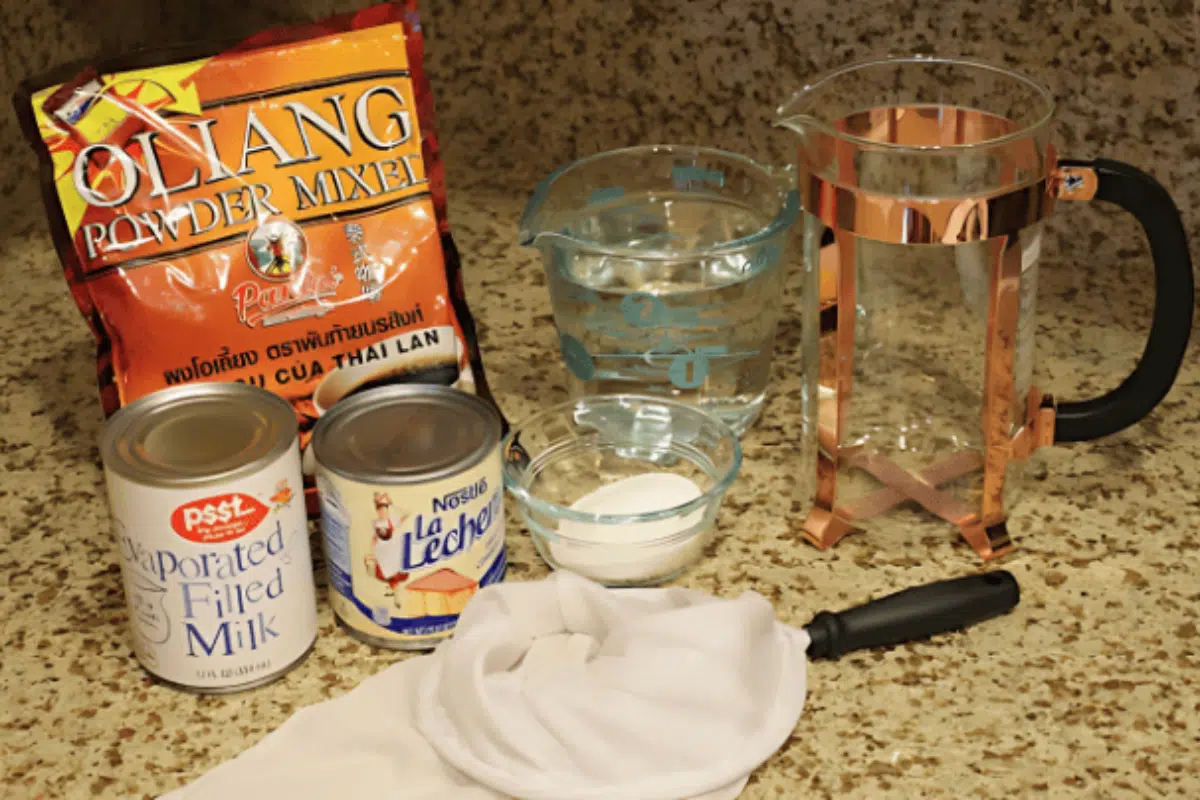
You don’t need a tungdtom or a Bangkok street cart to enjoy good oliang. Here’s what you need and two routes to making it:
The authentic route
- Oliang powder (Pantainorasingh or similar) at Thai supermarkets, Big C, Tops, Villa Market, or online
- Sweetened condensed milk for Longevity or Eagle brand works well
- Evaporated milk for the float on top
- Ice for crushed works best; regular cubed ice is fine
- A cloth filter, French press, or Aeropress for brewing
If you can’t find Oliang powder
Substitute with a very dark Robusta roast, then add: ½ tsp ground cardamom (the most important addition), a few drops of almond extract, and a tiny pinch of ground coriander. The cardamom does most of the work in mimicking Oliang’s characteristic smoky-spiced character. It won’t be identical, but it’s genuinely close.
For a full step-by-step with ratio guidance, head to our dedicated article on how to make the perfect Thai coffee at home. It covers brewing equipment, condensed milk ratios, and how to nail the evaporated milk layer.
| ☕ Quick tip
Brew your Oliang concentrate the night before and refrigerate it. Pour straight over ice in the morning — the cold rest actually mellows the bitterness and rounds out the grain notes—one of the best and cheapest morning coffees you can make at home. |
Frequently Asked Questions About Thai Iced Coffee
Is Thai iced coffee the same as Oliang?
Yes. “Thai iced coffee” and “oliang” refer to the same drink. Oliang (โอเลี้ยง) is the Thai name; outside Thailand, the drink is called Thai iced coffee or occasionally oleang.
Why is Thai iced coffee so sweet?
Sweetened condensed milk is the traditional sweetener, and it’s used generously. Street vendors calibrate for the Thai palate, which tends to prefer bold sweetness alongside strong, bitter coffee. If you want less sugar, you can ask vendors for nom noi (a little milk) or simply specify wan nit noi (a little sweet).
What makes Thai coffee taste different from regular coffee?
The grain and seed blend in Oliang powder. Roasted corn, soybeans, and sesame seeds alongside Robusta coffee create a smoky, nutty, toasty complexity that straight coffee can’t replicate. The strong Robusta base and generous condensed milk also push the flavour further from what most Western drinkers expect from iced coffee.
What coffee is Thailand most famous for?
Beyond Oliang, Thailand has become a serious specialty coffee producer, particularly high-altitude Arabica from Chiang Mai, Chiang Rai, and the Doi Tung region. Read more in our guide on which coffee is famous in Thailand.
For a complete overview of Thai coffee culture, from oliang carts to single-origin roasters, browse our Thai coffee FAQs, where we answer the most common questions in one place.
Comments