
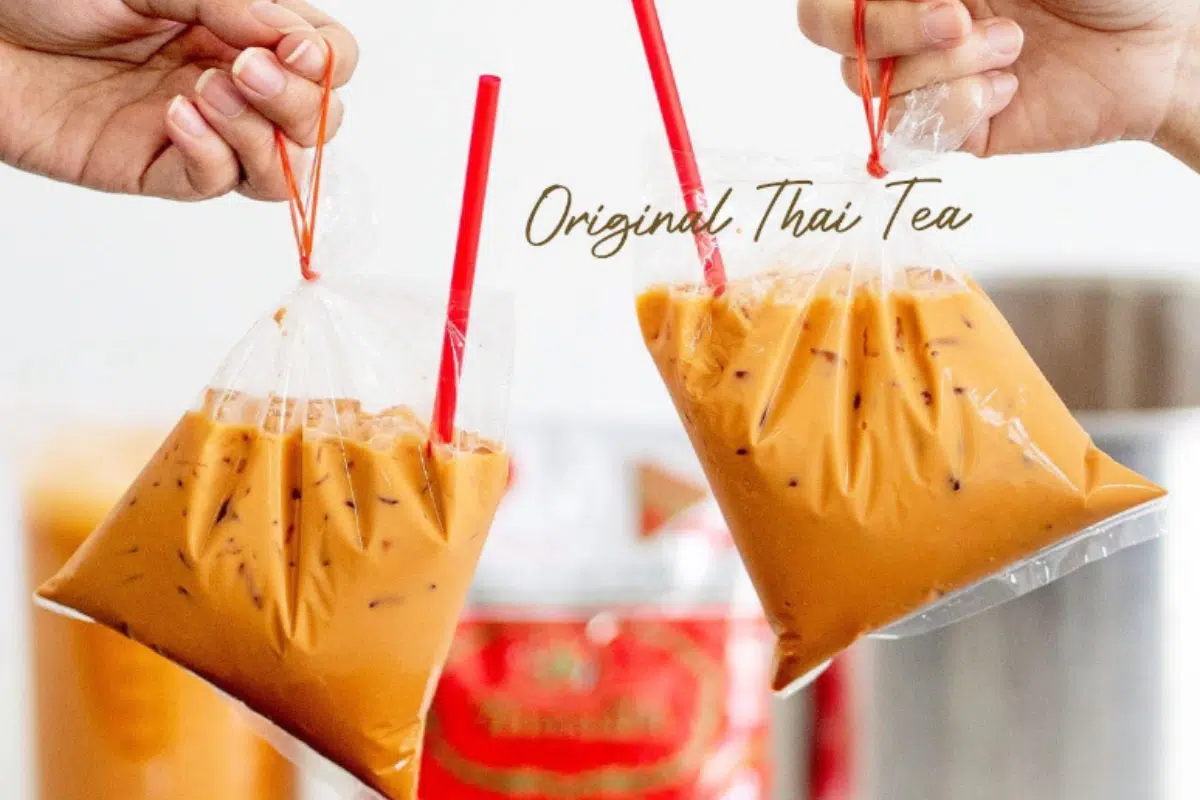
It stops people mid-scroll. That particular shade of orange, vivid, warm, and a little implausible, is one of the most recognisable colours in any drink on earth. But if you’ve ever wondered whether the colour of Thai iced tea (cha yen) comes from a rare local spice, a special variety of tea leaf, or some ancient brewing secret, the answer is more straightforward: it’s food dye.
Most of the commercial Thai tea mixes sold in Thailand and exported worldwide get their orange colour from FD&C Yellow No. 6, a synthetic dye also known as Sunset Yellow FCF. There’s a longer story behind why that colour became the standard, what the drink looks like without it, and what’s changing. For the full experience of cha yen culture, from old-school street stalls to modern specialty shops, our tea houses in Bangkok directory is a useful starting point.
The Short Answer: It’s Food Dye
The tea leaves, the spices, or the condensed milk do not produce the vivid orange in Thai iced tea. It comes from synthetic food colouring added to the dry tea blend during manufacturing. The dye most commonly used is:
- FD&C Yellow No. 6 (US), also called Sunset Yellow FCF (EU/international), or INS 110 (Codex Alimentarius). This is the primary colourant in the most widely used Thai tea mixes, including the dominant brand ChaTraMue.
- FD&C Red No. 40 is sometimes added alongside Yellow No. 6 in some blends to push the hue from yellow-orange toward a more vivid red-orange.
The colouring is mixed into the dried tea leaves before packaging. When you brew the tea, the dye dissolves into the water alongside the tannins and flavours extracted from the leaves. The result is the unmistakably bright orange that shows up in every Thai restaurant and boba shop photo on social media.
| ☕ The one-line answer
Thai tea is orange because of FD&C Yellow No. 6 (Sunset Yellow FCF), a synthetic food dye added to the commercial tea mix. Without it, the same strongly brewed black tea produces a deep amber-brown, not orange. |
What Does Thai Tea Look Like Without the Dye?
This is the question most articles skip. Here’s the honest answer, by stage:
| Stage | With food dye | Without food dye |
| Brewed concentrate (before milk) | Vivid orange-red | Deep reddish-amber, similar to strong black coffee |
| With condensed milk stirred in | Bright, warm orange | Pale amber-gold, closer to milky chai |
| With evaporated milk float | Layered vivid orange and cream | Layered pale caramel and cream |
| Ice dilution | Still clearly orange | Fades to a light honey-gold |
Without food dye, Thai tea made from properly brewed strong black tea (Assam or Ceylon) and condensed milk is a perfectly attractive drink. It just doesn’t have that distinctive orange identity. The colour of undyed cha yen is sometimes described as similar to strong chai latte, warm, amber, appealing, but not unusual. The orange was always a deliberate choice, not an inherent property of the ingredients.
Why Did Thai Tea Become Orange in the First Place?
The story starts in Bangkok’s Chinatown on Yaowarat Road, where a family of Teochew Chinese immigrants opened a tea shop called Lim Meng Kee in 1925. They were importing Chinese teas, oolong, green, and black for the Teochew community already settled around Bangkok.
The problem: hot Chinese tea was unpopular in Thailand’s tropical climate. By the 1940s, the shop had pivoted to iced black tea with condensed milk, which proved far more appealing to Thai customers. In 1945, the shop formalized this and its other products under a new brand name: ChaTraMue (ชาตรามือ), meaning “Hand Brand”, now one of the most recognisable tea brands in the world, with a 70% share of the Thai tea market as of 2025.
As iced black milk tea became a street staple in Bangkok, vendors needed to distinguish it visually from the many other drinks sold from the same pushcarts: iced coffee (oliang), lime tea (cha manao), and iced green tea. Adding orange food dye to the tea mix made cha yen immediately recognisable at a glance across a busy market. It was a practical branding decision made in an era before logos and social media.
What no one could have predicted was what happened when the orange arrived on Instagram and TikTok. The colour’s visual intensity made it ideal for food photography and short videos. The layered orange-and-cream look became one of the most shared drink images on social media in the 2010s, cementing the orange as not just a Thai identity marker but a global one. Today, a pale cha yen from an old Bangkok street stall sometimes surprises tourists who expect the vivid restaurant version. The real drink predates the colour.
The original Chinese tea houses in Bangkok that helped shape this tradition are part of the city’s Chinatown heritage; several still operate in the Yaowarat Road area today.
Which Dye Is Used and What Does It Mean for Health?
The primary synthetic dye in most commercial Thai tea mixes goes by several names depending on the market:
| Market | Name used on labels | Code |
| United States | FD&C Yellow No. 6 | — |
| European Union | Sunset Yellow FCF | E110 |
| International (Codex) | Sunset Yellow FCF | INS 110 |
| Thailand | Often unlisted or listed as สีสังเคราะห์ | Permitted to 100 mg/kg |
📋 Regulatory context (as of mid-2026)
- Thailand’s FDA permits Sunset Yellow FCF in food at up to 100 mg per kilogram.
- Several EU countries require warning labels on products containing E110; some have restricted its use.
- The US FDA announced a phased ban on synthetic food dyes, including Yellow No. 6, in 2025–2026. This has prompted some Thai tea mix brands to reformulate for export.
- Health research has linked E110 to increased hyperactivity in some children (Southampton University, 2007). The dye is considered safe within approved limits by the WHO and most national food authorities, though individuals with aspirin sensitivity may experience reactions.
For most people drinking cha yen occasionally in Thailand, the dye quantities involved are well within approved limits. The considerations are most relevant for people who consume Thai tea very frequently, for children, or for those with aspirin sensitivity.
Natural Colour Alternatives in Thai Tea
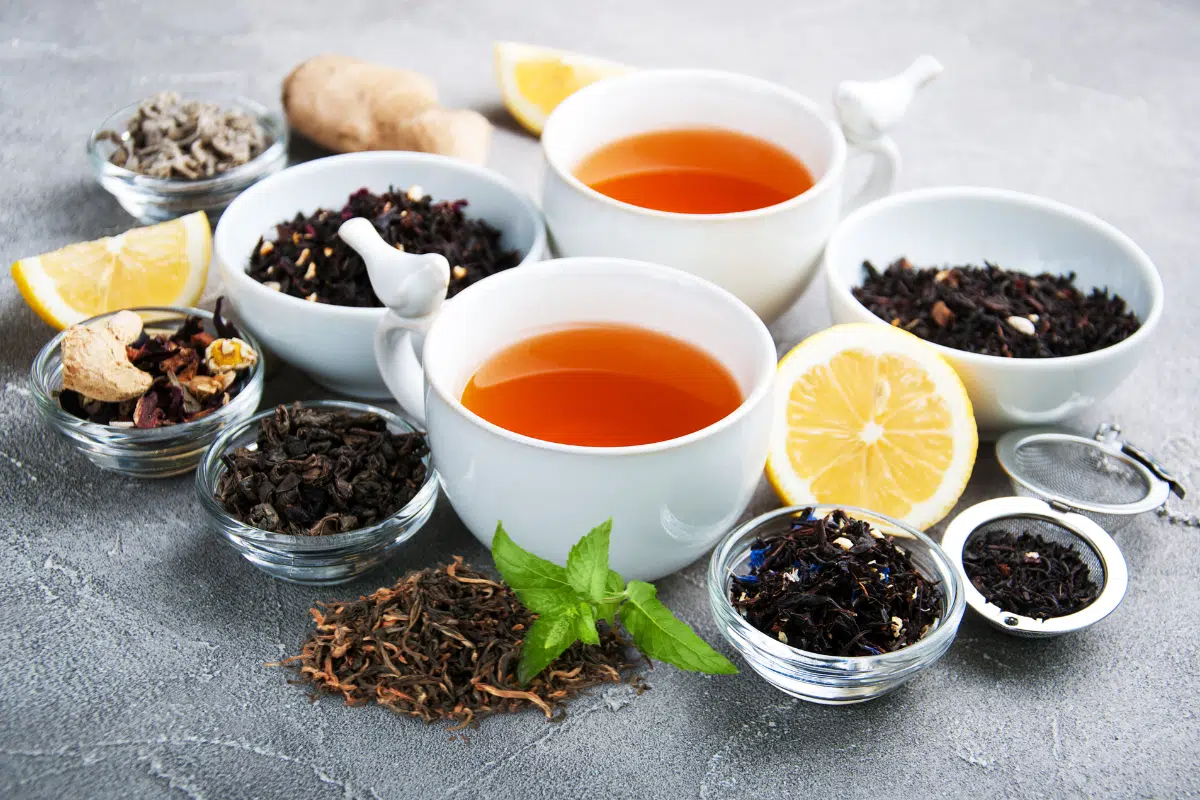
The growing demand for clean-label products, accelerated by the FDA’s US dye phase-out, has pushed several brands to reformulate. ChaTraMue itself has introduced dye-free versions as of 2025. Here’s what the natural alternatives produce:
| Natural colourant | Source | Colour results in tea | Taste impact |
| Annatto extract | Achiote seeds | Warm orange-red — closest to synthetic | Very mild; slight earthiness at high concentrations |
| Beta-carotene | Carrots / algae | Yellow-orange — lighter than synthetic | None at typical concentrations |
| Turmeric | Turmeric root | Golden yellow — less orange | Slight bitterness if overused |
| Safflower | Safflower flower | Red-orange — traditional in some blends | Mild floral note |
| Paprika oleoresin | Red peppers | Orange-red | Very faint warmth; not noticeable in milk tea |
The main difference consumers notice with natural colourants is that the orange is slightly softer and less neon-bright than the synthetic version. The taste of the tea is unchanged. Whether you prefer the vivid commercial orange or a more muted natural tone is purely personal; the drink underneath is the same.
Does the Orange Colour Affect the Taste?
No. The synthetic orange dye in Thai tea is purely cosmetic. It adds no flavour, no aroma, and no bitterness. The same condensed milk sweetness, the same black tea depth, and the same evaporated milk creaminess are present regardless of which colourant is used or whether any is used at all.
What does affect taste is the tea blend itself: how much Assam versus Ceylon, whether spices (star anise, cardamom) are included, and how strongly the tea is brewed. To understand the full flavour breakdown of Thai tea, see our guide What Does Thai Tea Taste Like?
How to Choose Dye-Free Thai Tea in Bangkok
If you prefer to avoid synthetic food colouring, it’s straightforward to identify on a Thai tea mix label. Here’s what to look for:
| What you see on the label | What it means |
| FD&C Yellow No. 6 / Sunset Yellow FCF / INS 110 / E110 | Synthetic dye — the standard in most commercial mixes |
| FD&C Red No. 40 / Allura Red / INS 129 | Second synthetic dye, sometimes added with Yellow No. 6 |
| Annatto extract / beta-carotene/ turmeric | Natural colourant — dye-free from a synthetic perspective |
| No colourant listed | May be an undyed mix (brews amber, not orange) |
In Bangkok, dye-free or naturally coloured Thai tea mixes are most commonly found at Villa Market, Tops Market’s organic section, and specialty tea retailers. Standard Big C and Makro shelves are dominated by mainstream brands that use synthetic dye. Online, Yim Tea and a handful of Thai artisan producers sell dye-free mixes for home brewing.
If you’d rather drink at a café that sources quality tea without commercial colouring, several specialty tea venues in Bangkok brew from loose-leaf or premium blends. Browse our Bangkok bubble tea shops and café directory; some list their tea sourcing in their listing details.
Frequently Asked Questions About Thai Tea Colour
Is Thai tea naturally orange?
No. Strongly brewed black tea (Assam or Ceylon) produces a deep reddish-amber colour. With condensed milk, it becomes a warm gold. The vivid orange associated with cha yen comes from synthetic food colouring, primarily FD&C Yellow No. 6 (Sunset Yellow FCF), added to the dry tea mix during manufacturing.
Can I make Thai tea at home without the orange colour?
Yes. Use a dye-free Thai tea mix (Yim Tea is the most widely available option outside Thailand) or brew from strong Ceylon/Assam loose-leaf tea with condensed milk. The drink will look amber-gold rather than orange. The taste will be nearly identical. If you want a natural orange, add a very small amount of turmeric or brew with safflower petals alongside the tea.
Does the food dye in Thai tea affect its caffeine level?
No. Caffeine content in Thai tea depends entirely on the black tea base and brew strength. The colouring is inert and does not affect caffeine. For full details on how much caffeine is in a glass of cha yen and how it compares to coffee, see our guide, ” Does Thai Tea Have Caffeine? ”
Is it safe to drink Thai tea with the orange food dye?
Yes, for most adults, drinking in normal quantities. Sunset Yellow FCF is approved by the WHO and Thailand’s FDA within set concentration limits. Health concerns centre on children (possible hyperactivity links) and people with aspirin sensitivity (who may react to FD&C Yellow No. 6). If you have either concern, dye-free mixes are a practical solution that delivers the same taste.
Why does my Thai tea look less orange than the one in the photo?
Three common causes: the tea mix you’re using contains less dye than commercial Thai restaurant mixes; the brew is too weak to carry the colour; or the condensed milk-to-tea ratio is higher than usual, which dilutes and lightens the hue. Brew stronger, and use a commercial Thai tea mix (ChaTraMue or Pantainorasingh) for the restaurant-grade orange. For more on what goes into the flavour and appearance, see our Thai drinks FAQs.
Comments