
Bangkok is in the middle of a matcha moment. Dedicated matcha cafés have opened across every neighbourhood, specialty espresso bars carry it as a standard option, and the dirty matcha latte has quietly become one of the city’s most-ordered drinks. Yet for all its popularity, the name still leaves many people unsure: Is it coffee? Is it tea? Is the ‘dirty’ something to worry about?
It’s both coffee and tea, and ‘dirty’ is a feature, not a flaw. Here’s everything you need to know: what a dirty matcha latte actually is, why the grade of your matcha matters more than anything else, what it tastes like, how much caffeine it carries, and where Bangkok’s matcha scene serves it best.
Dirty Matcha Latte at a Glance
| What it is | A matcha latte with a shot of espresso added |
| Why ‘dirty’? | Espresso darkens and ‘stains’ the bright green matcha, same logic as dirty chai and dirty coffee |
| Origin | Modern café creation; popularised through specialty cafés and TikTok/Instagram |
| Bangkok status | Standard menu item at dedicated matcha cafés city-wide as of 2025–2026 |
| Caffeine | ~120–150 mg per cup (matcha ~60–70 mg + espresso ~60–80 mg) |
| Matcha grade | Ceremonial grade recommended, holds up to espresso’s bitterness better |
| Best served | Iced for visual layers; hot for a warming, blended version |
| Sweetener | Optional vanilla syrup or maple syrup works well |
What Is a Dirty Matcha Latte?
A dirty matcha latte is a matcha latte with a shot of espresso added. That’s the whole definition. You take a matcha latte, matcha whisked with hot water, mixed with milk, and you add a shot of espresso, usually poured on top, so it creates a layered effect in the glass. The espresso ‘dirties’ the bright, clean green of the matcha, creating a brown swirl through the vivid colour.
The naming logic is the same as dirty chai and dirty coffee: in café culture, ‘dirty’ means adding espresso to a drink that doesn’t traditionally contain it. A dirty chai latte is chai tea plus espresso. A dirty matcha latte is a matcha latte plus espresso. The ‘dirtiness’ is visual, the darker coffee staining the green, and it also accurately describes what happens to the flavour: the clean, grassy umami of matcha gets a bold, roasted counterpoint from the coffee.
It’s a modern café creation rather than a traditional Japanese preparation. Traditional matcha ceremony involves whisking powdered green tea with hot water and drinking it plain; adding espresso would be considered as out of place as adding it to sake. But the dirty matcha latte belongs to the global wave of matcha-meets-café-culture drinks that has spread far beyond Japan, and Bangkok sits right at its leading edge.
The short version: Matcha latte + espresso shot = dirty matcha latte. The matcha brings earthy, umami sweetness; the espresso brings roasted, bitter boldness. Together, they create something better than either alone if you use the right ingredients.
The Three Layers: How It’s Made
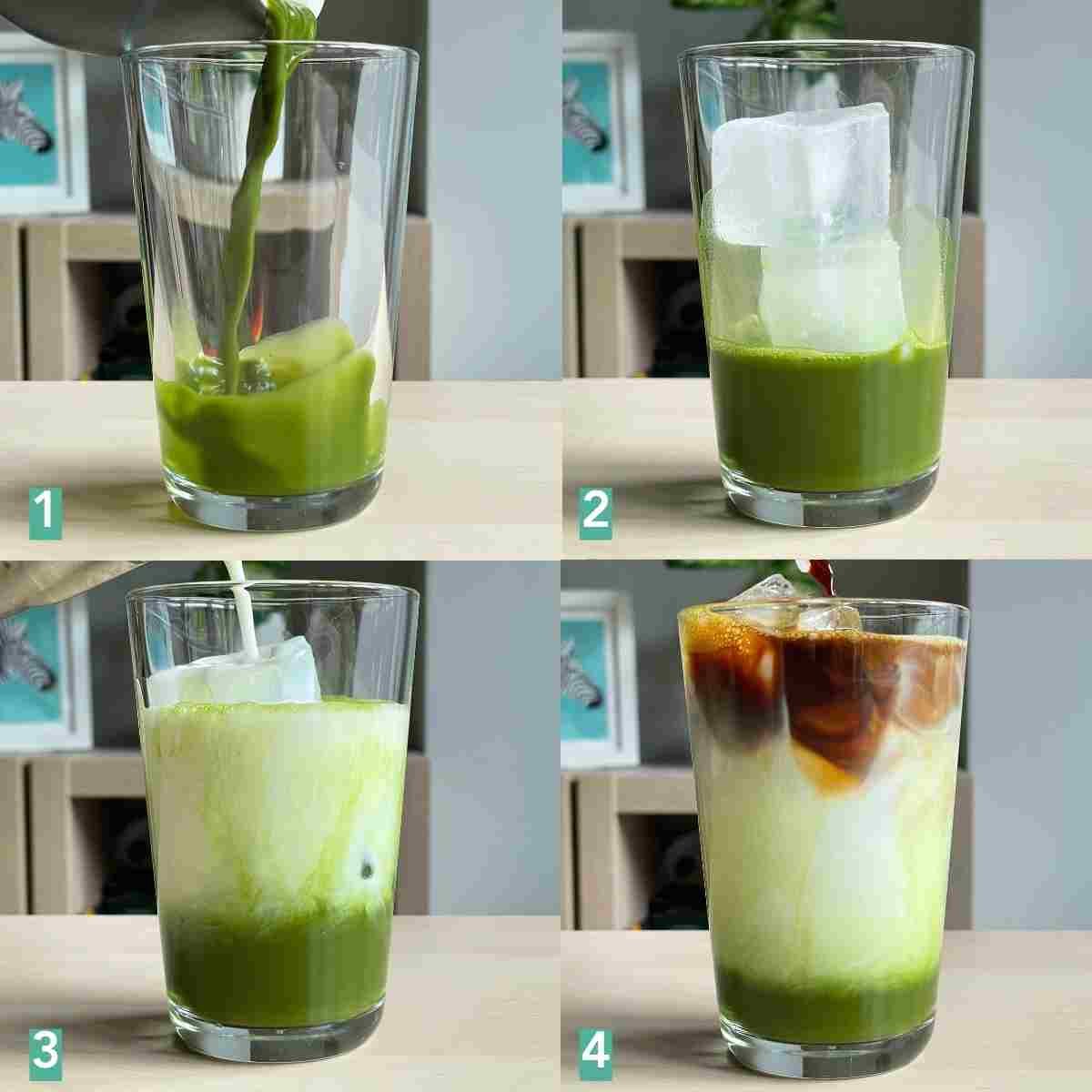
The visual appeal of a dirty matcha latte and the reason it travels well on social media comes from three distinct layers when served iced:
- Matcha base: Matcha powder whisked with a small amount of hot (not boiling, around 70–80°C) water until smooth and slightly frothy. Sifting the matcha before whisking removes clumps.
- Milk: Cold milk or frothed milk poured over ice (iced version) or steamed milk (hot version). Oat milk and whole dairy milk give the creamiest result; almond milk and soy also work, though oat holds its texture best with both tea and coffee.
- Espresso: A single or double shot poured slowly over the top. The density difference causes the espresso to float briefly before seeping down through the milk and matcha, creating the characteristic green-to-brown swirl. For the cleanest layers, pour the espresso over the back of a spoon or down the side of the glass.
In the iced version, the green, white, and brown layers are distinct and photogenic. In the hot version, the heat causes faster mixing; you’ll still taste all three components, but the visual separation blurs quickly.
Matcha Grade: The Decision That Makes or Breaks the Drink
This is the detail most dirty matcha recipes skip, and it’s the most important one. As Barista Magazine’s investigation into dirty matcha points out, the quality of your matcha determines whether the drink is balanced and layered or simply bitter and harsh.
| Matcha grade | What it is | For dirty matcha? |
| Ceremonial grade | Youngest tea leaves, first harvest | Best for dirty matcha, sweet, grassy, complex; holds up to espresso bitterness |
| Premium culinary grade | Higher-quality culinary; still vibrant green | Acceptable; may turn slightly harsh against strong espresso |
| Standard culinary grade | Older leaves are more astringent | Not recommended, the combined bitterness of low-grade matcha + espresso is unpleasant |
Espresso is already bitter and roasted. Lower-grade culinary matcha is also more bitter and astringent than ceremonial grade. Stack those two bitterness sources on top of milk, and you get a drink that’s unpleasant to drink rather than complex. Ceremonial-grade or premium culinary matcha is sweet, grassy, and umami-rich; it contrasts with espresso’s roasted bitterness rather than doubling it.
For the espresso itself: a lighter roast with fruit-forward or floral notes works best with matcha’s vegetal character. A very dark, smoky espresso can overwhelm the matcha entirely. Single-origin Ethiopian or Central American espresso is a popular pairing at specialty cafés that take dirty matcha seriously.
How Does a Dirty Matcha Latte Taste?
The flavour contrast is what makes the dirty matcha latte interesting and what makes it a better answer than just choosing one or the other.
Matcha brings earthy, umami-forward depth, slightly sweet, slightly vegetal, with a lingering grassiness that’s entirely distinct from any black tea or herbal infusion. Espresso brings the opposite: roasted, boldly bitter, with a sharp aromatic punch. In a dirty matcha latte, neither fully dominates. The matcha softens the espresso’s edge; the espresso gives the matcha more weight and depth than it has alone.
The result is a drink that tastes brighter and more nuanced than a plain latte (the matcha’s vegetal note adds a dimension espresso doesn’t have), and bolder and more complex than a plain matcha latte (the espresso adds roasted depth that green tea lacks). It’s earthy, creamy, slightly sweet if you add a sweetener, and carries a pleasant bitter finish.
Because the iced version keeps the layers partially separate, the taste evolves as you drink: first sips are more matcha-forward, later sips more espresso-heavy, with the milk moderating both throughout. It’s a drink that rewards slow sipping rather than a single long draw through a straw.
The Caffeine Story: Double Energy, Smoother Landing
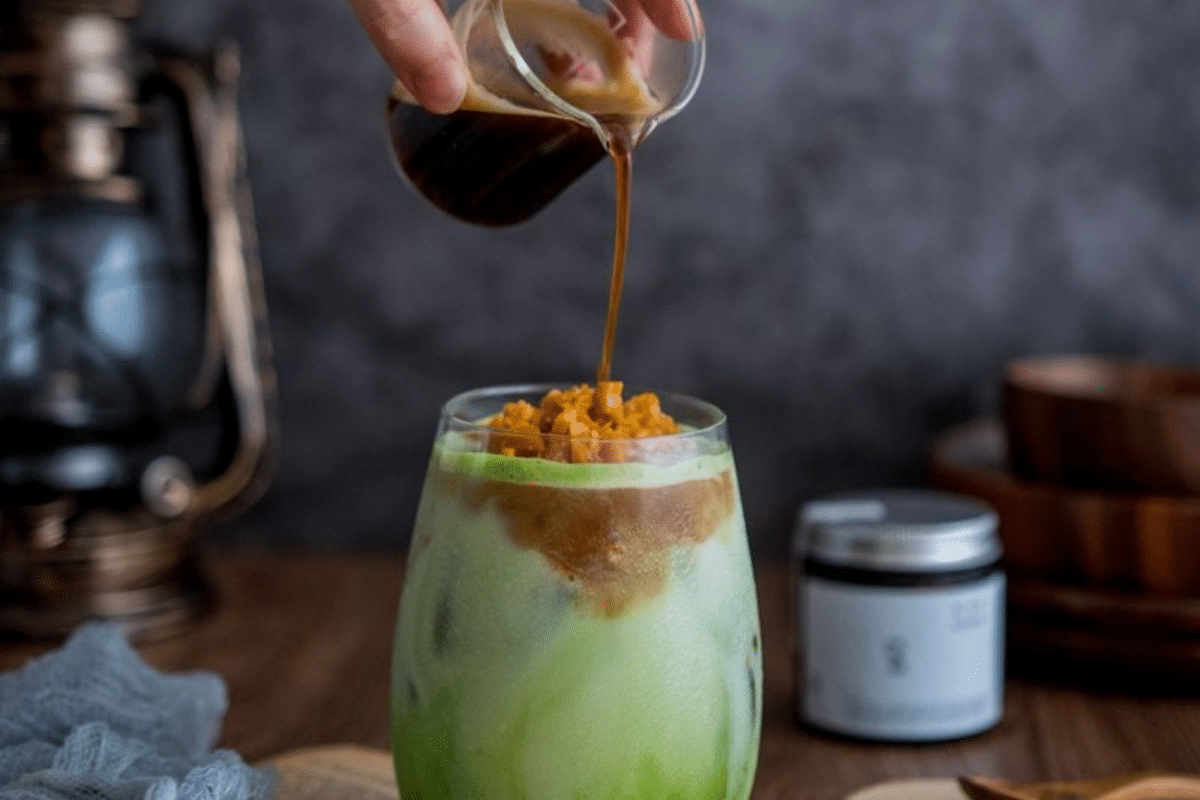
A dirty matcha latte is genuinely high-caffeine. Matcha typically contains around 60–70 mg of caffeine per serving, depending on the grade and quantity used. Add a standard single espresso shot (60–80 mg), and you’re looking at a total of approximately 120–150 mg per cup, comparable to two cups of drip coffee.
The reason many dirty matcha drinkers report feeling less wired than they would from the same caffeine in black coffee comes down to L-theanine, an amino acid found in matcha (and all green tea) that has a calming, focusing effect. L-theanine doesn’t reduce the caffeine; it modulates how the brain responds to it. The result, for many people, is an energy boost that comes on more gradually, lasts longer, and produces fewer of the jitteriness or anxiety side effects that a double espresso alone might trigger.
This doesn’t mean a dirty matcha latte is a low-caffeine option; it isn’t. It simply means the delivery of that caffeine tends to feel more measured than from pure espresso. If you’re sensitive to caffeine, order it with a single shot and a smaller amount of matcha, or try a plain matcha latte first.
Caffeine note: Dirty matcha latte: ~120–150 mg. Single espresso: ~60–80 mg. Regular matcha latte: ~60–70 mg. For reference, a can of Red Bull is 80 mg. Drink one dirty matcha latte, and you’ve already hit a meaningful caffeine dose for the day.
Dirty Matcha Latte in Bangkok
Bangkok’s matcha scene has expanded dramatically since 2024. According to a widely shared Medium essay on the city’s café market, dirty matcha now appears alongside matcha latte and hojicha as a standard item on almost every dedicated matcha café menu in Bangkok. The city’s matcha obsession, described by local food writers as the ‘matcha-pocalypse,’ has brought dozens of specialist venues to every major neighbourhood.
Among the strongest matcha venues in Bangkok, MTCH Matcha Tea House on Sukhumvit 23 (with a second branch in Ari) stands out for its ceremonial-grade sourcing and its range of preparations from traditional usucha to modern lattes, including dirty matcha. The quality of matcha at MTCH means the dirty version is made with the grade that actually benefits the combination.
Other notable venues for matcha across Bangkok include 7SUNS (Phra Khanong), Ksana at One City Centre, GOOD CHĀ (Thailand’s first plant-based matcha bar), and SO! MATCHA on Sukhumvit 40. For a full directory of Bangkok tea houses, the Caffeine Spots listing includes venues across neighbourhoods from Ari to Ekkamai.
Prices for a dirty matcha latte at Bangkok’s specialist venues typically run ฿150–250 for the iced version, slightly less for hot. Expect ceremonial or single-origin matcha at the dedicated matcha cafés and culinary-grade powder at most general coffee shops; the difference in taste for a dirty version is significant.
Dirty Matcha vs Other ‘Dirty’ Drinks
| Dirty Matcha Latte | Dirty Latte | Dirty Chai Latte | Dirty Coffee | |
| Base | Matcha + milk | Espresso + cold milk | Chai (spiced black tea) + milk | Cold milk |
| ‘Dirty’ add-in | Espresso shot | Espresso over cold milk | Espresso shot | Hot espresso |
| Tea? | Yes (matcha) | No | Yes (black tea) | No |
| Caffeine | ~120–150 mg | 60–80 mg | ~100–200+ mg | 60–80 mg |
| Served | Hot or iced | Cold, no ice | Hot or iced | Cold, no ice |
| Vibe | Earthy + bold | Clean, evolving | Spiced, aromatic | Intense, creamy |
Dirty matcha is the most nuanced of Bangkok’s ‘dirty’ drink family, the combination of matcha’s umami and L-theanine with espresso’s roasted bitterness creates a flavour complexity that dirty latte (espresso over cold milk only) doesn’t quite match. For a full breakdown of how the dirty latte took over Bangkok’s café menus, read the Caffeine Spots guide to the dirty latte in Thailand. And for the full picture of how ‘dirty’ became café shorthand for a whole category of layered drinks, the Dirty Coffee vs Dirty Latte guide explains the naming history.
How to Make a Dirty Matcha Latte at Home
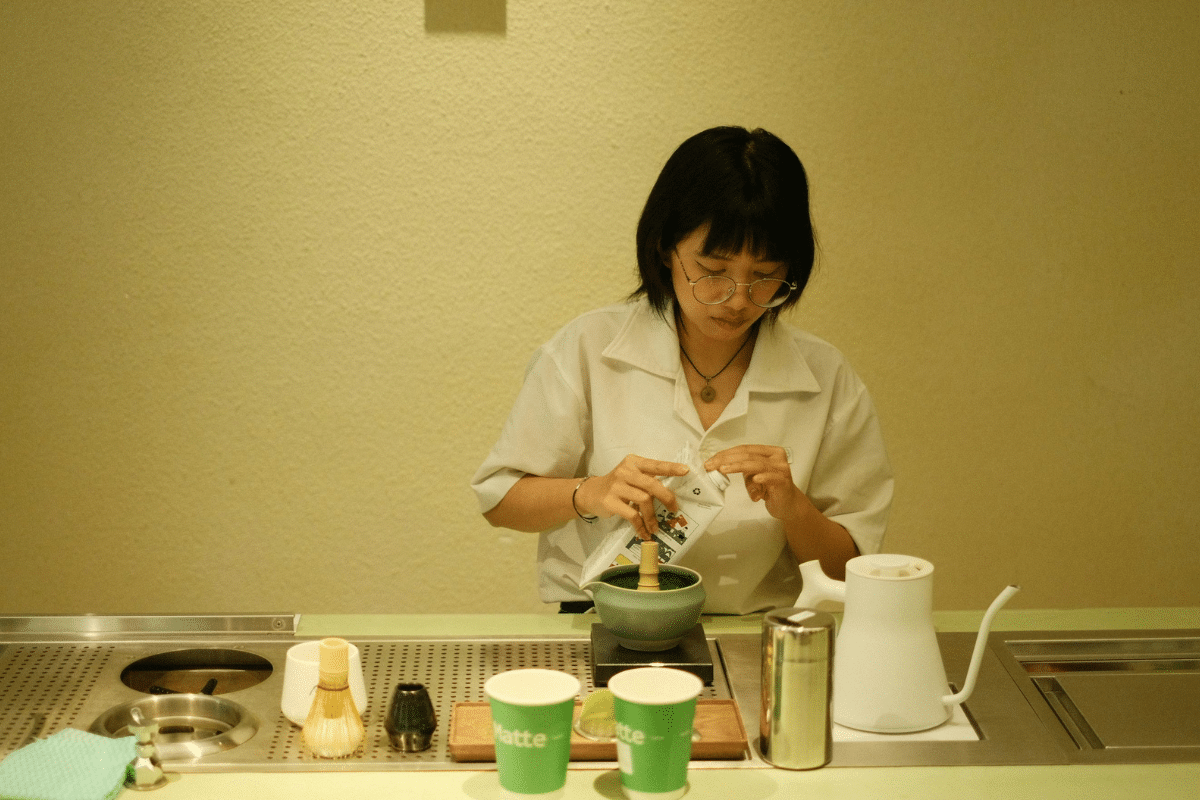
Iced dirty matcha latte (recommended)
- Matcha: Sift 1–2 g ceremonial-grade matcha into a small bowl or cup. Add 30 ml of water at 70–80°C (not boiling). Whisk in a zig-zag motion with a bamboo chasen or milk frother until completely smooth and lightly frothy. Add sweetener (1 tsp maple syrup or vanilla syrup) if desired, and whisk again briefly.
- Glass: Fill a clear glass 3/4 full with ice. Pour 150–180 ml of cold milk (oat or whole dairy gives the best results) over the ice.
- Matcha: Slowly pour the whisked matcha over the milk — it will settle above the milk layer.
- Espresso: Brew a single shot of espresso. Pour slowly over the back of a spoon onto the top of the glass. The espresso will sit above the matcha layer briefly before beginning to swirl downward. Serve immediately and drink before the layers fully integrate.
Tips for best results
- Use water at 70–80°C, not boiling — boiling water makes matcha bitter and damages the L-theanine
- Sift the matcha before whisking to avoid clumps — one clump of undissolved matcha makes the drink gritty
- A lighter-roast espresso with fruity notes pairs better with matcha’s vegetal character than a very dark roast
- Drink before stirring — the layered flavour experience is the point
Explore More Bangkok Coffee and Tea
Dirty matcha latte is one of the more interesting drinks in Bangkok’s growing ‘dirty’ drink cluster — a category that now includes the dirty latte, dirty chai, and even dirty soda. For the full picture of what’s trending in Bangkok’s drink scene and the coffee vocabulary behind it, the complete coffee FAQ guide covers everything from Thai oliang to single-origin specialty. And for a directory of where to drink it in person, Bangkok Tea Houses on Caffeine Spots is the best place to start.
Last reviewed: June 2026. Caffeine figures are approximate and vary by matcha quantity, grade, and espresso extraction. Consult a healthcare provider if you have caffeine sensitivity.
Comments