
If you have ever wondered about real Thai tea benefits while sipping a glass of cha yen in Bangkok, you are asking a fair question. The bright orange drink shows up everywhere here, from market stalls to specialty cafes, and it has a reputation as both a treat and a guilty pleasure. The truth sits somewhere in between: the tea base is genuinely good for you, but what most cafes pour on top can undo a lot of that benefit fast. Here at Caffeine Spots, we get asked this constantly, so here is the honest breakdown, calories included.
| Quick answer: yes, in moderation. The black tea at the base of cha yen is genuinely good for you, low in calories on its own, and rich in antioxidants. The catch is everything added to it. Sweetened condensed milk and sugar can turn a 2-calorie tea into a 150 to 450-calorie drink, with more sugar than a candy bar. Order it with less sugar (or wan noi in Thai), and you keep most of the benefits with a fraction of the sugar. |
What’s Actually in a Glass of Cha Yen
Before getting into benefits and calories, it helps to know what is actually in the cup. A glass of Thai tea, or cha yen, starts with strongly brewed black tea, almost always a Ceylon or Assam-style blend like the ChaTraMue mix you will find at the tea houses and street stalls across Bangkok. Vendors add spices such as star anise, cardamom, and sometimes tamarind, plus the orange-red colouring that makes cha yen instantly recognisable. The brew is sweetened with sugar, poured over ice, and finished with a generous pour of sweetened condensed milk or evaporated milk.
For the full flavour breakdown, we cover that in our guide to what Thai tea actually tastes like. All the caffeine in your glass comes from that black tea base, not the milk or sugar. We go deep on the exact numbers in Does Thai tea have caffeine; the short version is 30 to 60mg per glass, well below a standard cup of coffee.
The Real Health Benefits of Thai Tea
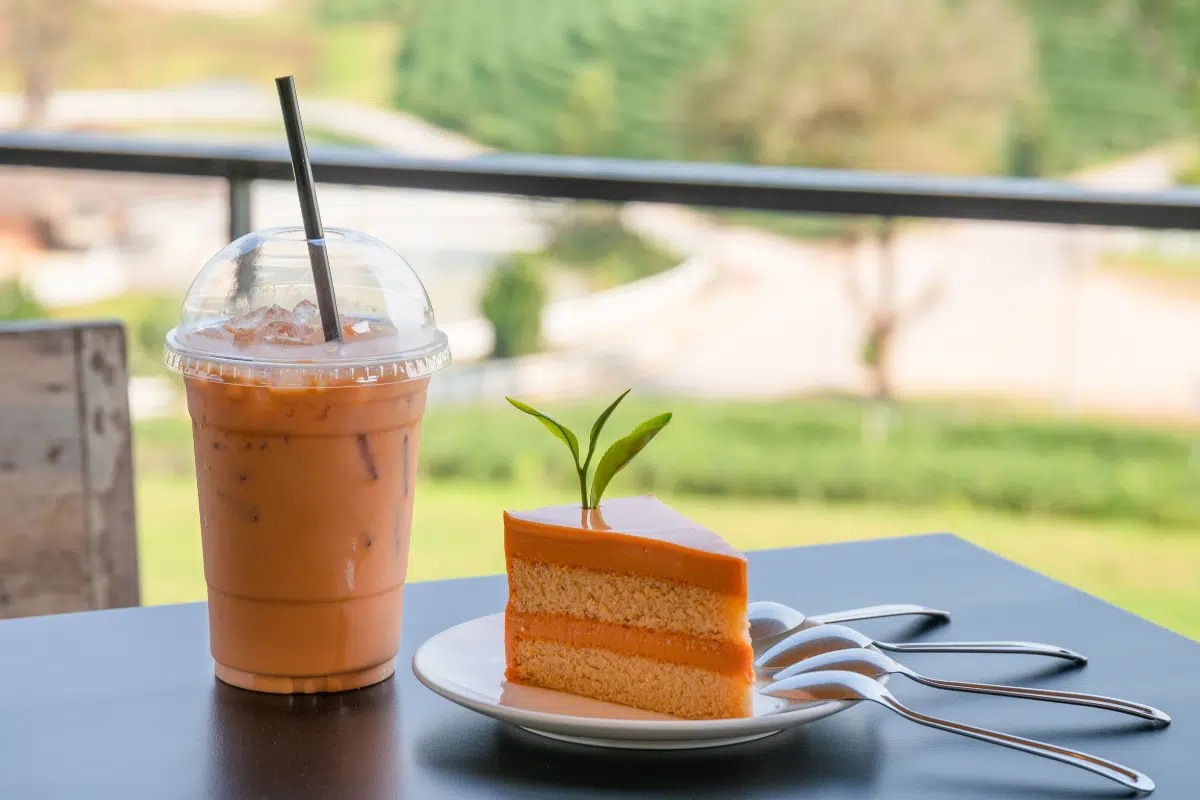
Strip away the sugar question for a moment, because the tea itself has real upside. Black tea is one of the most studied beverages in the world, and most of what makes it good for you survives the trip into a glass of cha yen.
- Antioxidants that fight oxidative stress: black tea is rich in catechins and polyphenols, including compounds called theaflavins and thearubigins, which have been linked to lower oxidative stress and a reduced risk of some chronic diseases over time.
- Heart health support: regular black tea drinkers tend to show better cholesterol profiles and blood vessel function, which is part of why WebMD lists heart health among the benefits commonly associated with black tea.
- A gentler energy lift: the caffeine in cha yen pairs with L-theanine, a calming amino acid naturally found in tea leaves, which is part of why Thai tea tends to feel like a smoother lift than a straight cup of coffee.
- A bonus from the spices: star anise and cardamom both carry their own antioxidant and anti-inflammatory compounds, and tamarind has traditionally been used to support digestion.
Thai researchers have taken an interest too. Faculty of Traditional Thai Medicine researchers at Prince of Songkla University have studied the compounds in black tea-based Thai drinks for their antioxidant and anti-inflammatory potential, alongside the much larger body of international research on black tea. None of this makes cha yen a health drink on its own, but the tea itself genuinely earns its reputation.
Thai Tea Calories and Sugar: The Real Numbers
Here is where the picture gets less rosy. Brewed black tea on its own barely registers, around 2 to 5 calories for a full cup. Almost everything you actually taste in a glass of Thai tea, the sweetness, the creaminess, the calories, comes from what gets added afterward.
According to Healthline’s breakdown of USDA data, a standard 8oz (240ml) serving of Thai tea made with condensed milk runs around 150 calories, with roughly 24 grams of added sugar, about six teaspoons. That is close to half of the entire recommended daily added-sugar limit for a 2,000-calorie diet, in a single glass.
| Style | Typical Size | Calories | Added Sugar |
| Unsweetened black tea | 8 oz (240 ml) | 2-5 kcal | 0 g |
| Hot Thai tea (cha ron) | 8 oz (240 ml) | 150-230 kcal | 20-24 g |
| Classic iced Thai milk tea | 16 oz (475 ml) | 240-300 kcal | 30-40 g |
| Thai tea bubble tea, with tapioca | 16 oz (475 ml) | 350-450 kcal | 40 g+ |
Figures are typical ranges; the exact total varies by cafe, tea mix, and how generous the pour of condensed milk is.
| Here is what most people miss: the tea itself is basically calorie-free. Nearly every calorie in your glass comes from the condensed milk and the sugar, not the tea. |
That bubble tea version is worth a closer look if you are a fan: the tapioca pearls alone typically add another 120 to 150 calories on top of the tea, which is why a Thai tea boba from one of Bangkok’s bubble tea shops can land closer to 450 calories than 150.
How to Order a Lighter Thai Tea in Bangkok
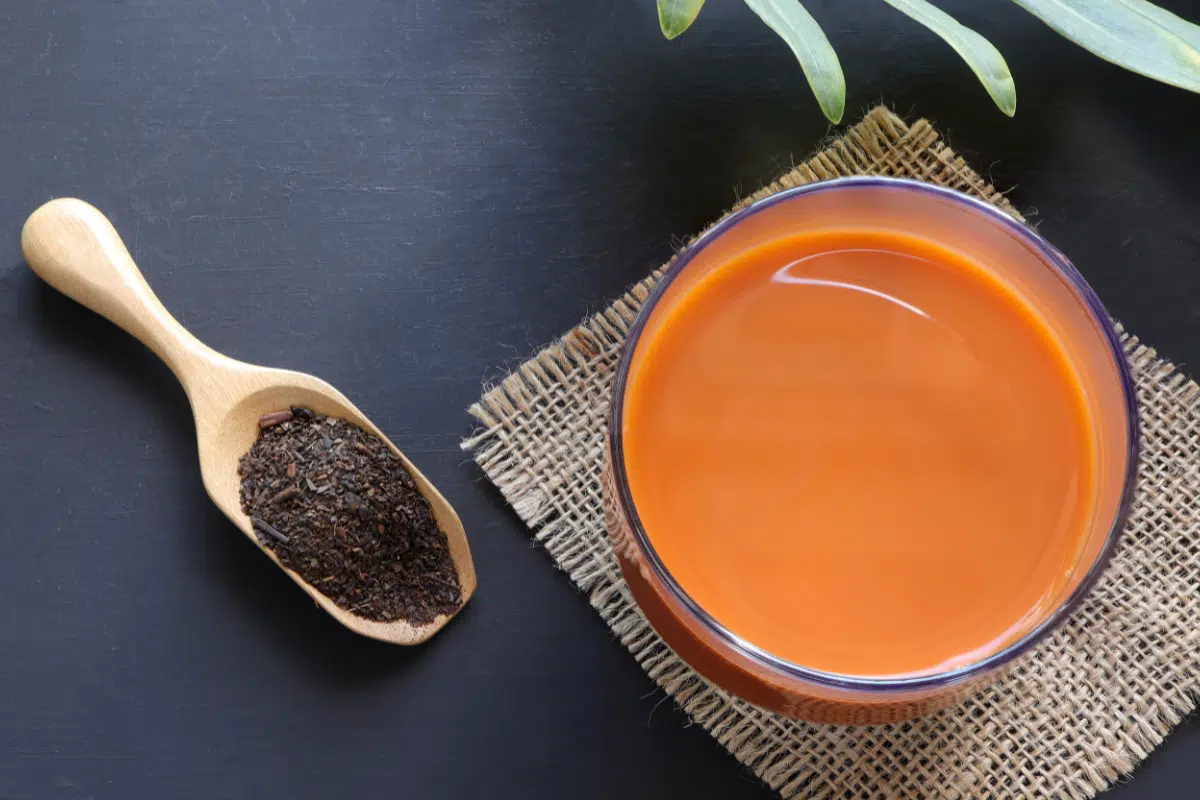
This is the part most health articles about Thai tea skip, because they are not written by anyone who actually orders cha yen in Bangkok every week. Here is how to keep the flavour and cut the sugar load, without giving up the drink entirely.
- Ask for it “wan noi”, less sweet. A growing number of Bangkok’s tea houses and bubble tea shops now offer sweetness levels the same way boba shops do, 25%, 50%, 75%, 100%, so just ask.
- Request evaporated milk instead of condensed milk, or half-and-half of both. Evaporated milk gives you the same creamy top layer with noticeably less sugar.
- Try it hot. A hot cha yen ron is often made with less syrup than the iced version, since there is no melting ice to dilute and balance against.
- Look for plant-based milk. Some of the city’s specialty tea houses now offer oat or soy milk alongside the traditional condensed milk, especially around Thonglor, Ari, and Phrom Phong.
- Order a regular instead of a large. The calories scale with the size of the cup, not the flavour, so sizing down is the easiest cut of all.
Who Should Be Careful with Thai Tea
- Managing blood sugar or diabetes: the sugar content is the main thing to watch, not the tea itself. A wan-noi order makes a real difference here.
- Caffeine-sensitive, or managing blood pressure or a heart condition: Cha Yen is moderate caffeine, well below coffee, but it still adds up alongside other caffeinated drinks during the day.
- Pregnant: general guidance suggests keeping total daily caffeine under about 200mg. A single glass of Thai tea is unlikely to push you over that alone, but it is worth tracking alongside coffee and other caffeinated drinks, and checking with your doctor.
- Avoiding dairy: traditional cha yen relies on condensed and evaporated milk. Ask about plant-based options if that matters to you.
Where to Try a Well-Made Thai Tea in Bangkok
If you want to taste cha yen the way it is meant to be, rather than the syrup-heavy version some tourist-facing stalls pour, Bangkok’s dedicated tea houses are the place to start. Browse our tea houses across Bangkok and the city’s Chinese tea houses for spots that take the tea itself seriously, not just the sugar on top. Many of these cafes brew in smaller batches and are far more willing to adjust sweetness on request than a high-volume street stall. Ing Teahouse is one of the dedicated tea spots in our directory, worth a visit if you are nearby.
FAQs About Thai Tea Benefits
Is Thai tea healthier than bubble tea?
Often, yes, comparing a classic iced Thai tea to a Thai tea bubble tea of the same size. The tapioca pearls in bubble tea typically add another 120 to 150 calories to the tea itself, with no real nutritional upside.
Does Thai tea have less sugar than soda?
It depends on the soda and the size, but a standard 16-oz iced Thai milk tea (30 to 40 grams of sugar) is often in the same range as a can of cola, sometimes higher once condensed milk is added generously.
How much caffeine is in Thai tea compared to coffee?
Noticeably less. A glass of cha yen carries roughly 30 to 60mg of caffeine, compared to 80 to 120mg in a standard cup of drip coffee. See our full breakdown of does Thai tea have caffeine.
Is Thai tea vegan?
Traditional Thai tea is not vegan, since it relies on sweetened condensed milk and evaporated milk. Ask for a plant-based milk swap at specialty tea houses if you need a dairy-free version.
Is Thai tea safe during pregnancy?
In moderation, generally yes, but check with your doctor. Keep total daily caffeine, including coffee and other tea, under the commonly recommended 200mg limit, and a single glass of Thai tea typically fits comfortably within that.
Can drinking Thai tea help with weight loss?
Not directly, and traditional cha yen usually works against it, given the added sugar and condensed milk. The black tea base itself has been studied for a modest effect on fat metabolism, but that benefit is easily cancelled out by a full-sugar, full-cream serving. If weight management matters to you, the wan-noi and evaporated-milk swaps above are the more realistic path than relying on the tea alone.
For more answers like these, our complete Thai coffee FAQ guide covers everything else you might wonder about Thailand’s other favourite drink.
Comments